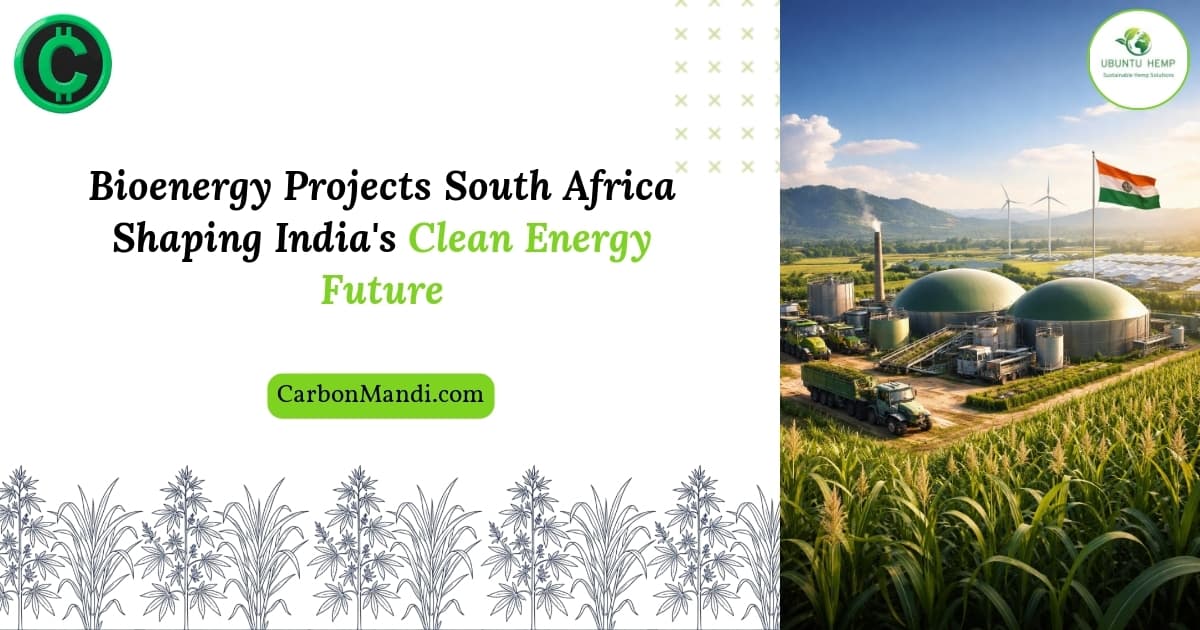
Bioenergy Projects in South Africa: Powering India's Clean Energy Revolution
- Carbon Credits
- Sustainability
- What is bioenergy projects South Africa and How is it Shaping India's Clean Energy Future?
Table of Contents
- A Fresh Look at Bioenergy Collaboration
- The Ripple Effect: South Africa’s Bioenergy Impact
- How India is Adopting These Innovations
- Real-World Success Stories
- Questions on Bioenergy and Its Future
- Taking Action for a Greener Tomorrow
A Fresh Look at Bioenergy Collaboration
Imagine two countries, thousands of miles apart, connected by a shared vision for clean energy. That’s exactly what’s happening with bioenergy projects in South Africa and their influence on India’s energy landscape. Bioenergy, derived from organic materials, offers a renewable alternative to fossil fuels. South Africa’s pioneering projects have created a blueprint that India is now adapting to meet its ambitious clean energy goals.
This collaboration is more than just technology transfer; it’s a strategic partnership that leverages South Africa’s expertise in biomass and biofuel production to help India reduce its carbon footprint. The keyword "What is bioenergy projects South Africa and How is it Shaping India's Clean Energy Future?" fits naturally here as we explore this dynamic relationship.
The Ripple Effect: South Africa’s Bioenergy Impact
South Africa’s bioenergy projects have matured through years of innovation and investment. These projects utilize agricultural waste, forestry residues, and even municipal solid waste to generate electricity and biofuels. The environmental benefits are significant: reduced greenhouse gas emissions, improved waste management, and enhanced energy security.
The impact extends beyond environmental gains. Economically, these projects create jobs in rural areas and stimulate local economies. Socially, they provide cleaner energy access to communities previously reliant on polluting fuels. South Africa’s approach demonstrates how bioenergy can be a catalyst for sustainable development.
How India is Adopting These Innovations
India faces unique energy challenges, including a growing population and rising energy demand. Inspired by South Africa’s success, India is integrating bioenergy projects into its clean energy strategy. This includes scaling up biomass power plants and promoting bioethanol as a fuel alternative.
The process involves adapting South African technologies to Indian conditions, such as different crop residues and climatic factors. Indian policymakers are also focusing on creating supportive frameworks for bioenergy investments, including subsidies and carbon credit incentives. This strategic adoption is shaping India’s clean energy future by diversifying its renewable energy portfolio.
Real-World Success Stories
One standout example is a South African bioenergy plant that converts sugarcane waste into electricity. This model has been studied by Indian energy firms aiming to replicate the process using rice husks and wheat straw. Another case is the collaboration between South African and Indian research institutions developing biofuel blends suitable for Indian vehicles.
These success stories highlight practical applications of bioenergy projects South Africa and how they are shaping India's clean energy future. They show that cross-border knowledge exchange can accelerate sustainable energy transitions.
Questions on Bioenergy and Its Future
What challenges does bioenergy face in India? One major hurdle is the collection and transportation of biomass feedstock, which can be costly and logistically complex. Another question is about environmental impacts: while bioenergy reduces fossil fuel use, it must be managed to avoid deforestation or soil degradation.
How scalable are these projects? With proper policy support and investment, bioenergy can scale significantly, especially in rural areas. What role do carbon markets play? They provide financial incentives for bioenergy projects by monetizing emission reductions, making projects more viable.
Taking Action for a Greener Tomorrow
For those interested in supporting or learning more about bioenergy projects, joining communities focused on clean energy is a great start. Join our WhatsApp community to connect with experts and enthusiasts.
Businesses can explore partnerships with South African firms or invest in bioenergy technologies adapted for India. Policymakers should continue to refine regulations that encourage sustainable bioenergy development.
Carbonmandi building this With the advisory of Ubuntuhemp.