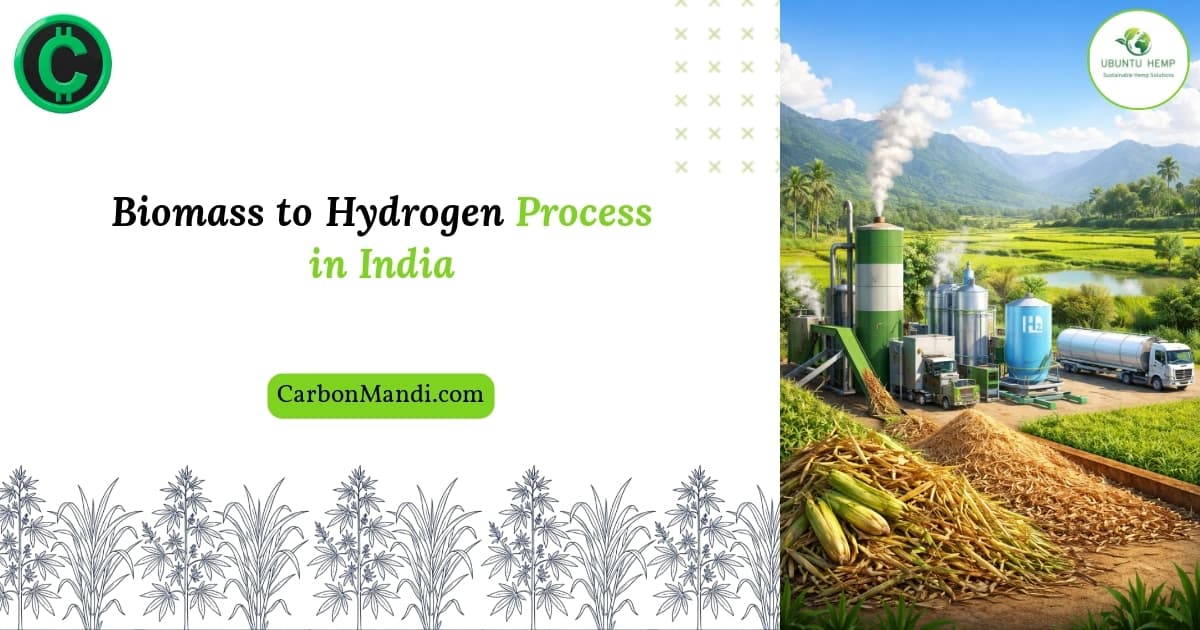
Biomass To Hydrogen Process India: Your 2026 Roadmap
- Biomass To Hydrogen Process India: Complete Guide for India 2026
- Carbon Credits
- Sustainability
Table of Contents
- Starting Point: Why Biomass for Hydrogen?
- The Indian Approach to Biomass Conversion
- Step-by-Step Process Breakdown
- Success Stories from Indian Innovators
- Common Queries About Biomass Hydrogen
- Taking Action: How to Engage
Starting Point: Why Biomass for Hydrogen?
India’s energy landscape is shifting rapidly, and biomass is emerging as a key player in hydrogen production. You might wonder why biomass? Unlike fossil fuels, biomass is renewable and abundant in India, making it a promising feedstock for clean hydrogen. This process not only taps into agricultural residues but also supports rural economies by creating new value chains.
The biomass to hydrogen process India is developing is tailored to local resources and environmental goals. It’s a practical solution that aligns with India’s commitment to reducing carbon emissions while boosting energy security. Understanding this process is crucial for anyone interested in sustainable energy or carbon markets in India.
The Indian Approach to Biomass Conversion
India’s strategy focuses on integrating traditional biomass resources with advanced hydrogen production technologies. Instead of importing costly fuels, India leverages its vast agricultural waste, forestry residues, and organic waste streams. This approach reduces waste management issues and turns them into valuable hydrogen fuel.
The government and private sectors are collaborating to optimize gasification and pyrolysis methods, which convert biomass into hydrogen-rich gases. These technologies are adapted to Indian conditions, considering feedstock variability and cost-effectiveness. The result is a scalable, eco-friendly hydrogen production pathway that supports India’s energy transition.
Step-by-Step Process Breakdown
Here’s how the biomass to hydrogen process India is implementing typically unfolds:
- Feedstock Collection: Agricultural residues like rice husks, sugarcane bagasse, and wood chips are gathered.
- Pre-treatment: Biomass is dried and sized to ensure efficient conversion.
- Gasification: Biomass undergoes high-temperature conversion in limited oxygen, producing syngas (a mixture of hydrogen, carbon monoxide, and carbon dioxide).
- Gas Cleaning: Impurities such as tar and particulates are removed to purify the syngas.
- Hydrogen Separation: Techniques like pressure swing adsorption isolate hydrogen from other gases.
- Storage and Distribution: Hydrogen is compressed and stored for use in fuel cells or industrial applications.
This process is designed to maximize hydrogen yield while minimizing environmental impact, making it a cornerstone for India’s green energy future.
Success Stories from Indian Innovators
Several Indian companies and research institutions have demonstrated the viability of biomass to hydrogen projects. For example, a startup in Karnataka successfully converted sugarcane waste into hydrogen, supplying local industries with clean fuel and reducing their carbon footprint.
Another case in Tamil Nadu involved a pilot plant using rice husk gasification to produce hydrogen for transportation fuel. This project not only showcased technical feasibility but also highlighted economic benefits for farmers and local communities.
These examples illustrate how the biomass to hydrogen process India is adopting can be both sustainable and profitable, encouraging wider adoption across the country.
Common Queries About Biomass Hydrogen
Q: Is biomass hydrogen production cost-effective compared to other methods? A: While initial setup costs can be high, using locally available biomass reduces feedstock expenses, making it competitive over time.
Q: What environmental benefits does this process offer? A: It lowers greenhouse gas emissions by replacing fossil fuels and utilizes waste materials that would otherwise decompose and release methane.
Q: How scalable is this technology in India? A: Scalability depends on feedstock availability and infrastructure, but ongoing projects show promising expansion potential.
Taking Action: How to Engage
If you’re interested in the biomass to hydrogen process India is pioneering, consider these steps:
- Connect with industry groups and research centers focusing on biomass energy.
- Explore partnerships with startups and government initiatives promoting hydrogen technologies.
- Join discussions and updates via our WhatsApp community: Join our WhatsApp community.
Understanding and participating in this evolving sector can position you at the forefront of India’s clean energy revolution.
Carbonmandi building this With the advisory of Ubuntuhemp