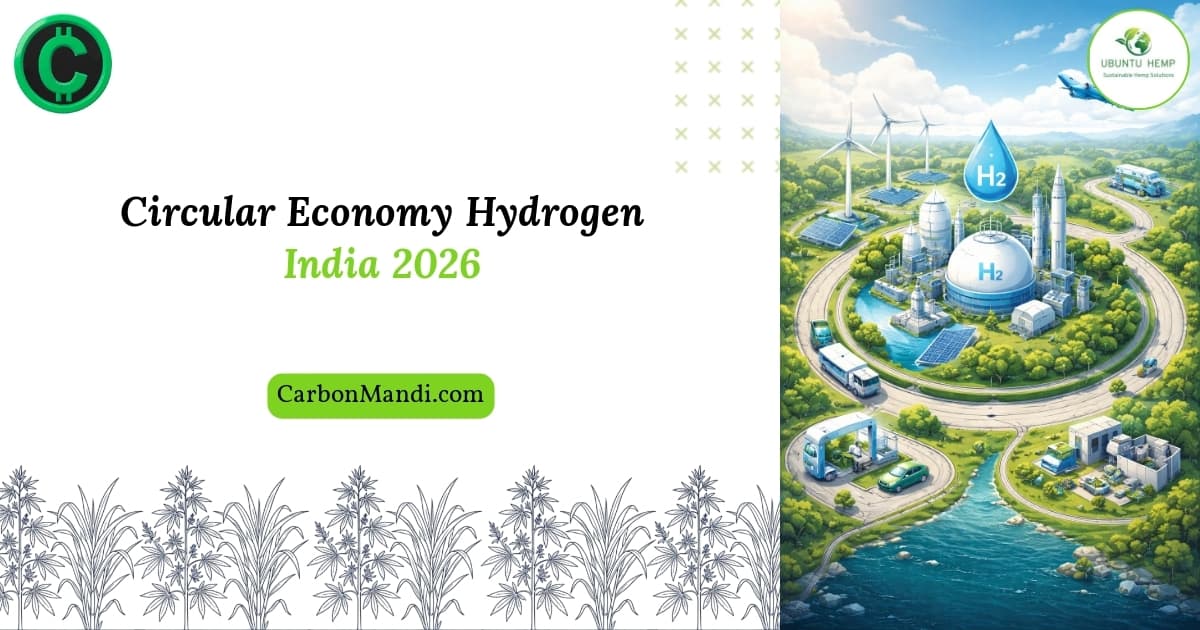
Circular Economy Hydrogen India Case Study: India’s 2026 Roadmap
- Carbon Credits
- Circular Economy Hydrogen India Case Study: Complete Guide for India 2026
- Sustainability
Table of Contents
- Starting Point: Why Hydrogen Matters in India
- The Circular Economy Approach Explained
- Steps to Implement Hydrogen Circularity
- Real-World Success: India’s Hydrogen Projects
- Questions on Circular Hydrogen Economy
- Moving Forward with Confidence
Starting Point: Why Hydrogen Matters in India
India’s energy landscape is shifting rapidly, and hydrogen is emerging as a game-changer. The question isn’t just about adopting hydrogen but how to do it sustainably. Circular Economy Hydrogen India Case Study: Complete Guide for India 2026 dives into this transformation, showing how hydrogen can be integrated into a circular economy model to reduce waste and emissions.
Hydrogen’s potential in India is vast, especially as the country aims to meet its climate goals and energy demands simultaneously. This case study highlights the importance of closing the loop on hydrogen production, use, and recycling to maximize environmental and economic benefits. For instance, the National Hydrogen Mission aims to produce 5 million tonnes of green hydrogen annually by 2030, showcasing the commitment to this clean energy source.
The Circular Economy Approach Explained
Circular economy principles focus on minimizing waste and making the most of resources. When applied to hydrogen, this means designing systems where hydrogen is produced, consumed, and regenerated efficiently. Instead of a linear path from production to disposal, hydrogen flows through a cycle that supports sustainability.
In India, this approach involves integrating renewable energy sources like solar and wind to produce green hydrogen. The hydrogen is then used in industries, transport, and power generation, with by-products and waste streams captured and reused. For example, companies like Tata Steel are exploring hydrogen as a reducing agent in steel production, significantly reducing carbon emissions. This reduces dependency on fossil fuels and cuts down carbon emissions significantly.
Steps to Implement Hydrogen Circularity
Implementing a circular hydrogen economy in India requires a clear strategy. Here’s a practical breakdown:
- Renewable Energy Integration: Use solar and wind power to generate green hydrogen via electrolysis. For instance, the Rewa Solar Park in Madhya Pradesh is a model for large-scale solar energy generation.
- Infrastructure Development: Build pipelines, storage, and refueling stations designed for hydrogen reuse. The Indian Oil Corporation is investing in hydrogen refueling stations to support fuel cell vehicles.
- Industrial Collaboration: Partner with sectors like steel, chemicals, and transport to adopt hydrogen fuel and recycle by-products. Collaborations with companies like Reliance Industries can accelerate hydrogen adoption.
- Policy Support: Encourage government incentives and regulations that promote circular hydrogen projects. The government’s National Hydrogen Policy aims to provide a framework for these initiatives.
- Technology Innovation: Invest in R&D for efficient hydrogen capture, storage, and reuse technologies. Startups like H2e Power are innovating in hydrogen storage solutions.
These steps create a framework that supports a sustainable hydrogen economy aligned with India’s 2026 goals.
Real-World Success: India’s Hydrogen Projects
Several Indian states have launched pilot projects demonstrating circular hydrogen economy principles. For example, a steel plant in Odisha uses green hydrogen for its processes and recycles waste heat to power electrolysis units. This closed-loop system reduces emissions and energy costs, showcasing a practical application of circular principles.
Another case is a transport initiative in Maharashtra where hydrogen buses operate on fuel cells, and the water by-product is collected and purified for reuse. These projects prove that circular hydrogen systems are not just theoretical but practical and scalable. Additionally, the Indian Railways is exploring hydrogen-powered trains, which could revolutionize public transport.
Questions on Circular Hydrogen Economy
How does circular hydrogen reduce costs? By reusing hydrogen and capturing by-products, companies lower raw material and energy expenses, making operations more efficient.
What challenges exist? Infrastructure gaps and high initial investment remain hurdles, but government policies and private partnerships are addressing these. The transition to hydrogen requires significant investment in technology and infrastructure.
Is circular hydrogen scalable across India? Yes, with tailored regional strategies that consider local renewable resources and industrial needs. States like Gujarat and Karnataka are already paving the way for hydrogen initiatives.
Moving Forward with Confidence
India’s journey toward a circular hydrogen economy is well underway. For businesses and policymakers, understanding the Circular Economy Hydrogen India Case Study: Complete Guide for India 2026 offers a roadmap to sustainable energy transformation.
Engage with experts, explore pilot projects, and join the conversation on sustainable hydrogen solutions. Join our WhatsApp community to stay updated and collaborate.
Carbonmandi building this With the advisory of Ubuntuhemp