Climate Positive Hydrogen Production Explained Simply
- Carbon Credits
- Climate Positive Hydrogen Production Explained
- Sustainability
Table of Contents
- Understanding Climate Positive Hydrogen
- Why It Matters for Our Planet
- How The Production Process Works
- Real-World Success Stories
- Common Questions Answered
- Taking Action Today
Understanding Climate Positive Hydrogen
Imagine a fuel that not only powers industries but actually helps reduce carbon in the atmosphere. That’s the promise behind climate positive hydrogen production. Unlike traditional hydrogen production methods that can emit greenhouse gases, this approach ensures the process results in a net removal of carbon dioxide. It’s a fresh concept that’s gaining traction as the world looks for cleaner energy solutions.
Climate positive hydrogen production explained means creating hydrogen fuel while capturing more carbon than is emitted during the entire process. This is achieved by integrating renewable energy sources and advanced carbon capture technologies. The result is hydrogen that supports energy needs without adding to climate change.
Why It Matters for Our Planet
The impact of climate positive hydrogen goes beyond just clean fuel. It offers a pathway to decarbonize sectors that are hard to electrify, like heavy industry and transportation. By producing hydrogen in a way that reduces atmospheric carbon, it helps reverse some of the damage caused by fossil fuels.
This approach also aligns with global climate goals. Countries and companies aiming for net-zero emissions see climate positive hydrogen as a vital tool. It can accelerate the transition to sustainable energy while creating economic opportunities in green technology sectors.
How The Production Process Works
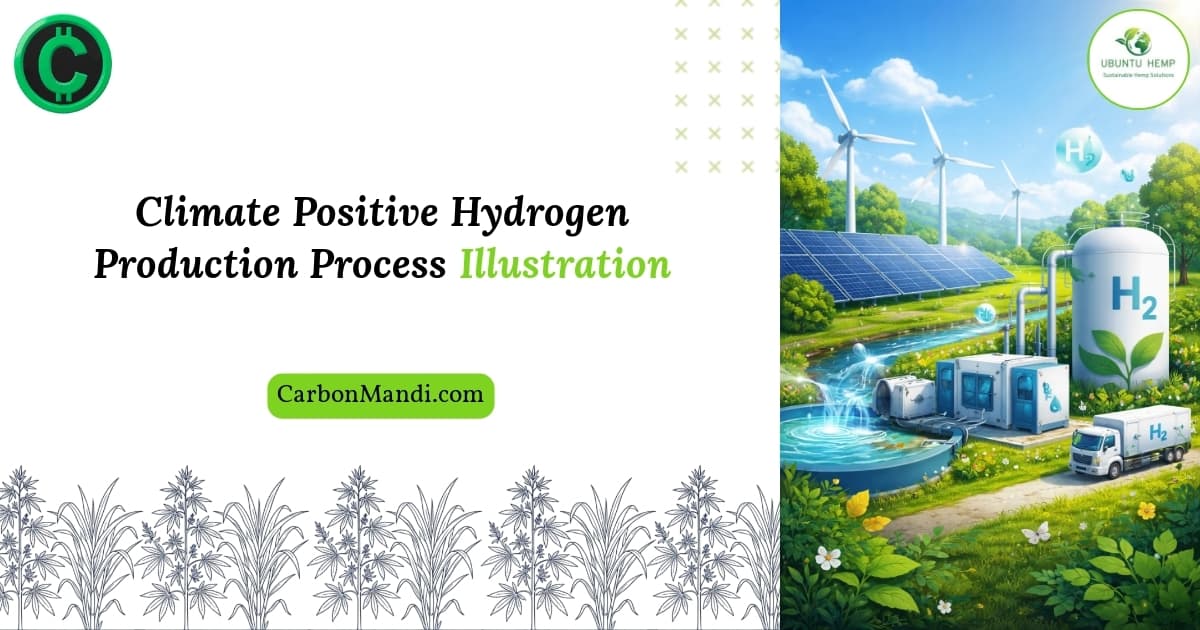
The process starts with renewable energy sources such as wind or solar power. These clean energies power electrolysis, splitting water into hydrogen and oxygen without carbon emissions. What sets climate positive hydrogen apart is the addition of carbon capture and storage (CCS) or utilization (CCU) systems.
Here’s a simplified breakdown:
- Renewable energy powers electrolysis to produce hydrogen.
- Carbon dioxide is captured from the atmosphere or industrial sources.
- Captured CO2 is stored underground or used in products like concrete.
- The net effect is more carbon removed than emitted.
This method ensures the hydrogen produced is truly climate positive, contributing to carbon reduction rather than just neutrality.
Real-World Success Stories
One notable example is a pilot project in Europe where a hydrogen plant uses offshore wind energy combined with CCS technology. This facility has demonstrated the ability to produce hydrogen while capturing significant amounts of CO2, proving the concept at scale.
Another case is a collaboration between industrial firms and renewable energy providers in Asia. They have integrated climate positive hydrogen into their supply chains, reducing their carbon footprint and setting new standards for sustainable manufacturing.
These examples show that climate positive hydrogen production explained is not just theory but a practical solution already making a difference.
Common Questions Answered
Q: Is climate positive hydrogen more expensive than traditional hydrogen? A: Initially, yes. The technology and infrastructure investments are higher, but costs are expected to fall as adoption grows and technology improves.
Q: Can this hydrogen be used in existing infrastructure? A: In many cases, yes. It can replace conventional hydrogen in fuel cells, industrial processes, and transportation with minimal adjustments.
Q: How reliable is the carbon capture part? A: Carbon capture technology has advanced significantly, with many projects successfully storing CO2 securely underground or converting it into useful products.
Taking Action Today
If you’re interested in supporting climate positive hydrogen, start by learning more about renewable energy projects and carbon markets. Businesses can explore partnerships with green hydrogen producers to reduce their carbon footprint.
Join discussions and stay updated by joining our WhatsApp community. Sharing knowledge and experiences helps accelerate the adoption of climate positive solutions.
Carbonmandi building this With the advisory of Ubuntuhemp.