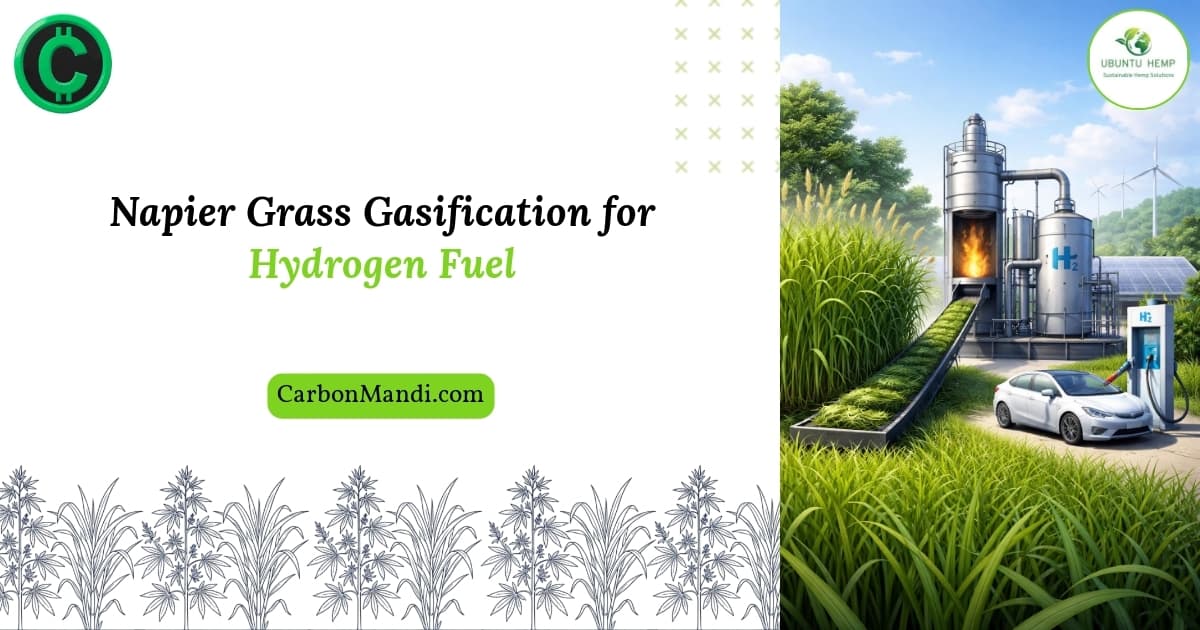
Harnessing Napier Grass Gasification for Clean Hydrogen Fuel
- Carbon Credits
- Napier Grass Gasification for Hydrogen Fuel
- Sustainability
Table of Contents
- Rethinking Energy with Napier Grass
- Unlocking the Potential of Gasification
- Steps to Convert Napier Grass into Hydrogen
- Real-World Applications and Success
- Questions on Feasibility and Impact
- Taking Action Towards Sustainable Fuel
Rethinking Energy with Napier Grass
Imagine a grass that grows fast, requires little water, and can be turned into clean energy. Napier grass fits this description perfectly. It’s not just fodder for animals anymore; it’s becoming a key player in renewable energy through a process called gasification. Napier Grass Gasification for Hydrogen Fuel is gaining attention because it offers a sustainable way to produce hydrogen, a clean fuel with zero carbon emissions at the point of use.
Hydrogen fuel is often seen as the future of clean energy, but producing it sustainably remains a challenge. Using Napier grass as a biomass source for gasification addresses this by converting plant material into hydrogen without relying on fossil fuels. This approach could revolutionize how we think about energy production, especially in regions where Napier grass grows abundantly.
Unlocking the Potential of Gasification
Gasification is a thermochemical process that transforms organic material into a gas mixture called syngas, which contains hydrogen, carbon monoxide, and other gases. When Napier grass undergoes gasification, it breaks down into these components under controlled heat and limited oxygen. The hydrogen is then separated and purified for use as fuel.
This method has several advantages. It uses renewable biomass, reduces waste, and produces hydrogen with a much smaller carbon footprint compared to traditional methods like steam methane reforming. Plus, Napier grass grows quickly and can be harvested multiple times a year, making it a reliable feedstock.
Steps to Convert Napier Grass into Hydrogen
Turning Napier grass into hydrogen fuel involves a few key stages:
- Harvesting and Preparation: Fresh Napier grass is collected and dried to reduce moisture content, which improves gasification efficiency.
- Gasification Reactor: The dried biomass is fed into a gasifier where it is heated at high temperatures with limited oxygen, producing syngas.
- Gas Cleaning: The syngas is cleaned to remove impurities like tar and particulates that could damage equipment or reduce hydrogen purity.
- Hydrogen Separation: Technologies such as pressure swing adsorption or membrane separation isolate hydrogen from the syngas.
- Storage and Distribution: The purified hydrogen is compressed and stored for use in fuel cells, industrial processes, or transportation.
Each step is crucial to ensure the process is efficient and environmentally friendly. Advances in gasifier design and gas cleaning technologies continue to improve the viability of this approach.
Real-World Applications and Success
Several pilot projects have demonstrated the promise of Napier Grass Gasification for Hydrogen Fuel. For example, a renewable energy initiative in East Africa successfully integrated Napier grass gasification to supply hydrogen for local transportation and small-scale power generation. This project showed a reduction in fossil fuel dependence and provided a model for rural energy solutions.
In another case, a research facility in Southeast Asia used Napier grass gasification to produce hydrogen for industrial use, cutting down on greenhouse gas emissions significantly. These examples highlight how this technology can be adapted to different scales and needs, making it a versatile option for clean energy.
Questions on Feasibility and Impact
Is Napier grass gasification cost-effective? While initial setup costs can be high, the low cost of biomass and potential carbon credits make it economically attractive over time.
What about environmental concerns? Using Napier grass helps sequester carbon during growth, and gasification emits fewer pollutants than burning fossil fuels. Proper management ensures sustainability.
Can this technology scale? Yes, with ongoing research and investment, gasification plants can be scaled from small community units to larger industrial facilities.
Taking Action Towards Sustainable Fuel
If you’re interested in exploring Napier Grass Gasification for Hydrogen Fuel, consider connecting with experts and communities focused on renewable energy. Joining discussions can provide insights and support for implementation.
Join our WhatsApp community to engage with professionals and enthusiasts in the carbon market and renewable energy sectors.
Carbonmandi building this With the advisory of Ubuntuhemp.