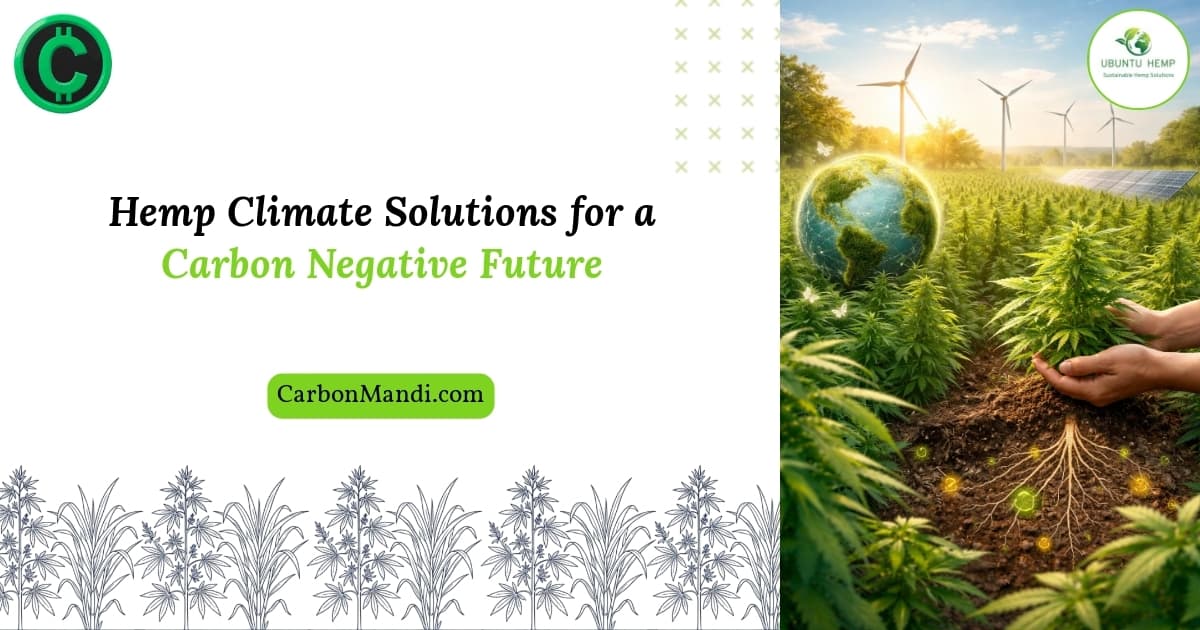
Hemp Climate Solutions: Paving the Way to Carbon Negativity
- Carbon Credits
- Hemp Climate Solutions for a Carbon Negative Future
- Sustainability
Table of Contents
- Rethinking Carbon Capture with Hemp
- The Environmental Edge of Hemp
- How Hemp Projects Turn Carbon Negative
- Real-World Wins: Hemp in Action
- Questions About Hemp and Carbon Markets
- Taking Your First Step
Rethinking Carbon Capture with Hemp
Imagine a plant that not only grows quickly but also pulls more carbon dioxide from the atmosphere than many traditional crops. Hemp fits this description perfectly. Hemp climate solutions for a carbon negative future are gaining traction because this plant’s natural properties make it a powerful tool in the fight against climate change. Unlike many other crops, hemp’s rapid growth cycle and dense biomass allow it to absorb significant amounts of CO2, making it a natural ally in carbon sequestration efforts.
This isn’t just theory. The potential of hemp to contribute to a carbon negative future lies in its ability to be integrated into carbon markets, where its carbon capture can be quantified, verified, and traded. This creates incentives for farmers and businesses to adopt hemp cultivation as part of their sustainability strategies.
The Environmental Edge of Hemp
Hemp’s environmental benefits extend beyond carbon capture. It requires fewer pesticides and less water compared to many conventional crops, reducing its ecological footprint. Its deep roots improve soil health and prevent erosion, which supports long-term agricultural sustainability. These factors combine to make hemp a climate-friendly crop that supports ecosystem resilience.
Moreover, hemp can be processed into a variety of products that replace more carbon-intensive materials. From bioplastics to construction materials, hemp-based products reduce reliance on fossil fuels and lower overall emissions. This multi-dimensional impact is why hemp climate solutions for a carbon negative future are increasingly recognized as a holistic approach to sustainability.
How Hemp Projects Turn Carbon Negative
Turning hemp cultivation into a carbon negative project involves several key steps. First, selecting the right land and cultivation practices ensures maximum carbon uptake. Next, monitoring and verification technologies track the carbon sequestered by hemp crops, providing data needed for carbon credit certification.
Farmers and project developers then register these verified carbon credits on recognized carbon markets. This process not only generates revenue but also encourages wider adoption of hemp as a climate solution. The integration of blockchain and AI tools is improving transparency and trust in these carbon offset projects, making hemp a credible player in the carbon market.
Real-World Wins: Hemp in Action
Consider a pilot project in the Midwest United States where a cooperative of farmers switched to hemp cultivation. Within two years, they reported a 30% increase in soil carbon levels and generated verified carbon credits sold to local businesses aiming to offset their emissions. This success story highlights how hemp climate solutions for a carbon negative future can be scaled effectively.
Another example comes from Europe, where hemp-based insulation materials are replacing traditional, carbon-heavy options in new buildings. This substitution reduces the carbon footprint of construction projects and supports circular economy principles.
Questions About Hemp and Carbon Markets
What makes hemp projects credible in carbon markets? Verification is key. Independent third-party audits ensure that carbon sequestration claims are accurate and permanent. How long does hemp need to grow to capture meaningful carbon? Typically, hemp’s fast growth cycle of 3-4 months allows for multiple harvests per year, increasing carbon capture potential.
Is hemp cultivation suitable everywhere? While adaptable, hemp thrives best in temperate climates with well-drained soils. Understanding these factors helps stakeholders make informed decisions about project locations.
Taking Your First Step
If you’re interested in exploring hemp climate solutions for a carbon negative future, start by connecting with experts and communities focused on sustainable agriculture and carbon markets. Joining discussions can provide insights and practical advice.
- Research local regulations and incentives for hemp cultivation.
- Engage with carbon market platforms to understand certification requirements.
- Connect with farmers or project developers already working with hemp.
For ongoing support and updates, Join our WhatsApp community.
Carbonmandi building this With the advisory of Ubuntuhemp.