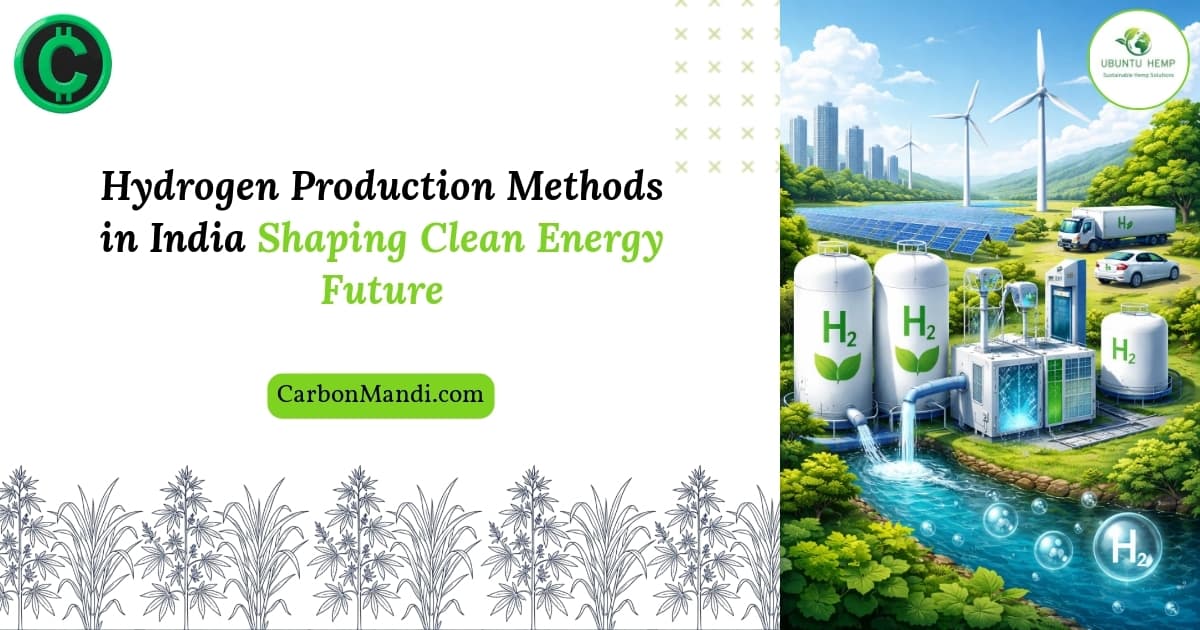
Hydrogen Production in India: Powering a Clean Energy Revolution
- Carbon Credits
- Sustainability
- What is hydrogen production methods India and How is it Shaping India's Clean Energy Future?
Table of Contents
- A Fresh Look at Hydrogen in India
- Exploring India's Hydrogen Production Techniques
- Why Hydrogen Matters for India's Energy Landscape
- Real-World Progress: India's Hydrogen Projects
- Common Queries About Hydrogen in India
- Taking Action Towards a Hydrogen-Powered Future
A Fresh Look at Hydrogen in India
Hydrogen is no longer just a futuristic concept for India; it’s becoming a cornerstone of the country’s clean energy ambitions. What is hydrogen production methods India and how is it shaping India's clean energy future? This question is gaining traction as India pushes to reduce its carbon footprint and diversify its energy sources. Unlike traditional fuels, hydrogen offers a clean alternative that can power industries, transport, and even homes without harmful emissions.
India’s vast renewable resources, like solar and wind, provide an ideal backdrop for producing green hydrogen, which is generated using renewable energy. This shift is crucial because it aligns with India’s commitment to sustainable development and energy security.
Exploring India's Hydrogen Production Techniques
India employs several hydrogen production methods, each with unique advantages and challenges. The most common methods include:
Steam Methane Reforming (SMR): Currently the dominant method, SMR extracts hydrogen from natural gas. While cost-effective, it produces carbon emissions unless paired with carbon capture technologies.
Electrolysis: Using electricity to split water into hydrogen and oxygen, electrolysis is gaining momentum, especially when powered by renewable energy sources. This method produces green hydrogen, which is emission-free.
Biomass Gasification: This technique converts organic materials into hydrogen-rich gas. It’s promising for rural areas with abundant agricultural waste.
Thermochemical Water Splitting: An emerging technology that uses heat from solar concentrators or nuclear reactors to split water molecules.
Each method plays a role in India’s strategy to scale hydrogen production while balancing cost, sustainability, and infrastructure readiness.
Why Hydrogen Matters for India's Energy Landscape
Hydrogen’s potential impact on India’s energy future is significant. It offers a way to decarbonize sectors that are hard to electrify, such as heavy industry and long-haul transport. Hydrogen can also store excess renewable energy, addressing the intermittency issues of solar and wind power.
Moreover, hydrogen production methods India are helping reduce dependence on imported fossil fuels, enhancing energy security. The government’s National Hydrogen Mission aims to make India a global hub for hydrogen production and export, creating jobs and stimulating economic growth.
Real-World Progress: India's Hydrogen Projects
India is already seeing tangible progress in hydrogen adoption. For example, the Indian Oil Corporation has launched pilot projects producing green hydrogen at its refineries. Similarly, the state of Gujarat is developing a hydrogen hub leveraging its renewable energy capacity.
Another success story is the collaboration between public and private sectors to build electrolyzers powered by solar farms, producing green hydrogen for industrial use. These projects demonstrate how hydrogen production methods India are evolving from theory to practice, shaping a cleaner energy future.
Common Queries About Hydrogen in India
Q: Is hydrogen production expensive in India? A: Initially, green hydrogen production costs are higher than conventional fuels, but costs are expected to fall with technology improvements and scale.
Q: How safe is hydrogen as a fuel? A: Hydrogen is highly flammable but with proper handling and infrastructure, it is as safe as other fuels.
Q: What role does policy play? A: Government incentives, subsidies, and clear regulations are critical to accelerating hydrogen adoption.
Taking Action Towards a Hydrogen-Powered Future
India’s journey toward a hydrogen economy is underway, but it requires coordinated efforts from industry, government, and communities. If you want to stay updated or get involved, consider joining discussions and knowledge-sharing platforms.
Join our WhatsApp community to connect with experts and enthusiasts focused on clean energy and hydrogen innovations.
Carbonmandi building this With the advisory of Ubuntuhemp.