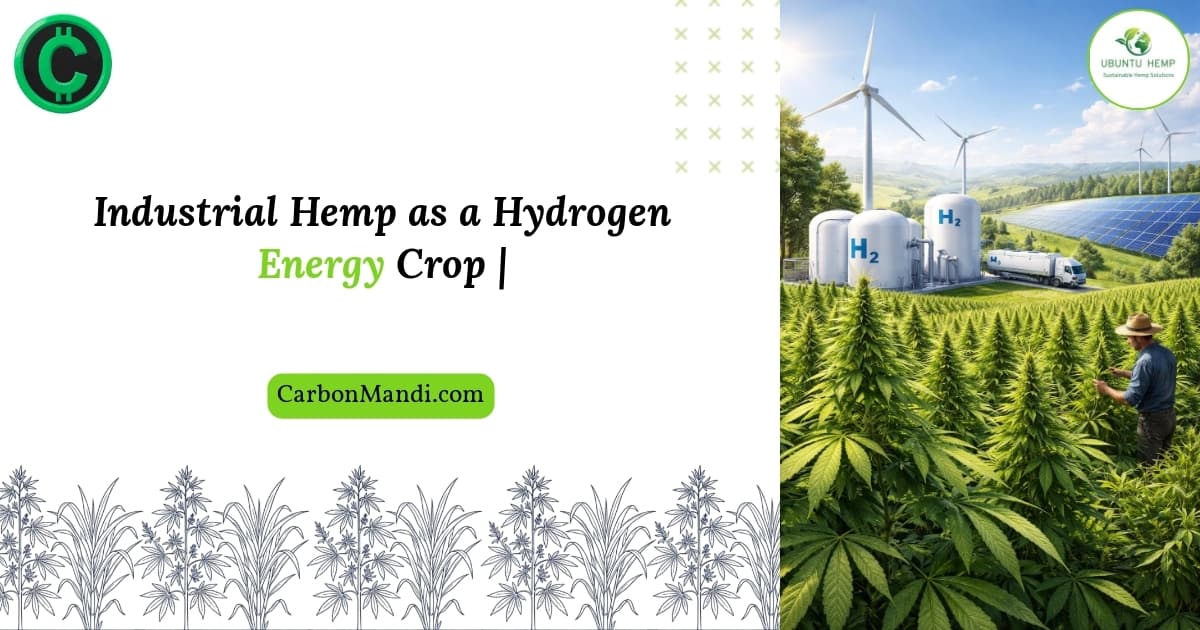
Industrial Hemp as a Hydrogen Energy Crop: A Fresh Energy Frontier
- Carbon Credits
- Industrial Hemp as a Hydrogen Energy Crop
- Sustainability
Table of Contents
- Rethinking Energy Crops
- Why Hemp for Hydrogen?
- From Field to Fuel: The Process
- Real-World Applications
- Questions on Industrial Hemp and Hydrogen
- Taking the Next Step
Rethinking Energy Crops
Imagine a crop that not only grows quickly but also helps produce clean hydrogen fuel. Industrial hemp as a hydrogen energy crop is gaining attention for exactly that reason. Unlike traditional energy crops, hemp offers a unique combination of rapid biomass growth and environmental benefits. This makes it a compelling candidate for sustainable hydrogen production.
Hydrogen is often touted as the fuel of the future, but sourcing it sustainably remains a challenge. Industrial hemp could bridge that gap by serving as a renewable feedstock. This approach aligns with growing carbon market demands and the push for greener energy solutions. Moreover, companies like HempHydro are already exploring innovative methods to optimize hemp cultivation for hydrogen production, showcasing the potential of this versatile crop.
Why Hemp for Hydrogen?
Industrial hemp stands out because of its high cellulose content, which is ideal for biohydrogen production. Its fast growth cycle means it can be harvested multiple times a year, providing a steady supply of raw material. Additionally, hemp cultivation requires fewer pesticides and less water compared to other crops, reducing its environmental footprint significantly.
Using hemp as a hydrogen energy crop also supports soil health through phytoremediation, absorbing toxins and improving land quality. This dual benefit of energy production and land restoration adds value beyond just fuel generation. Furthermore, the Hemp Industries Association emphasizes the importance of hemp in sustainable agriculture, advocating for its role in enhancing biodiversity and ecosystem health.
From Field to Fuel: The Process
Turning industrial hemp into hydrogen involves several key steps:
- Cultivation: Hemp is grown on suitable land with minimal chemical inputs, often utilizing organic farming practices.
- Harvesting: The biomass is collected at peak maturity for maximum cellulose, ensuring optimal yield.
- Pretreatment: The hemp biomass undergoes processing to break down cellulose into fermentable sugars, which can be achieved through methods like steam explosion or acid hydrolysis.
- Biohydrogen Production: Microbial fermentation or gasification converts sugars into hydrogen gas, with emerging technologies improving efficiency.
- Purification and Storage: The hydrogen is purified and stored for energy use, ready to be utilized in fuel cells or as a clean energy source.
This process is scalable and can integrate with existing bioenergy infrastructure, making it a practical option for regions looking to expand renewable hydrogen sources. For instance, GreenHemp Solutions has developed a modular system that allows for localized hydrogen production from hemp, reducing transportation costs and emissions.
Real-World Applications
A pilot project in the Pacific Northwest recently demonstrated the viability of industrial hemp as a hydrogen feedstock. The project achieved a 25% increase in hydrogen yield compared to traditional biomass sources. This success has sparked interest among energy companies exploring sustainable alternatives.
In Europe, several farms are experimenting with hemp cultivation specifically for biohydrogen production, combining it with carbon credit programs to enhance profitability. These real-world examples highlight the growing momentum behind this innovative crop-energy pairing. Notably, Hemp Energy Corp has partnered with local farmers to create a sustainable supply chain for biohydrogen, illustrating the collaborative efforts in this field.
Questions on Industrial Hemp and Hydrogen
Is hemp cultivation for hydrogen energy economically viable?
Yes, especially when factoring in carbon credits and the crop’s low input costs. The dual benefits of soil improvement and fuel production improve overall returns, making it an attractive investment for farmers and energy producers alike.
How does hemp compare to other bioenergy crops?
Hemp grows faster and requires fewer resources than many traditional energy crops, making it more sustainable and cost-effective. Its ability to thrive in diverse climates further enhances its appeal as a reliable energy crop.
What are the environmental impacts?
Hemp cultivation reduces soil erosion and absorbs pollutants, while hydrogen fuel produced emits no greenhouse gases at point of use, supporting climate goals. Additionally, the use of hemp can contribute to carbon sequestration efforts, further mitigating climate change.
Taking the Next Step
If you’re interested in exploring industrial hemp as a hydrogen energy crop, start by connecting with agricultural experts and renewable energy consultants. Consider pilot projects to assess local feasibility and potential yields.
Engage with communities focused on sustainable energy and carbon markets to stay informed and share insights. Join our WhatsApp community to connect with like-minded professionals.
Carbonmandi is building this initiative with the advisory of Ubuntuhemp, ensuring that best practices in hemp cultivation and hydrogen production are followed. By taking these steps, you can be part of the movement towards a more sustainable energy future.