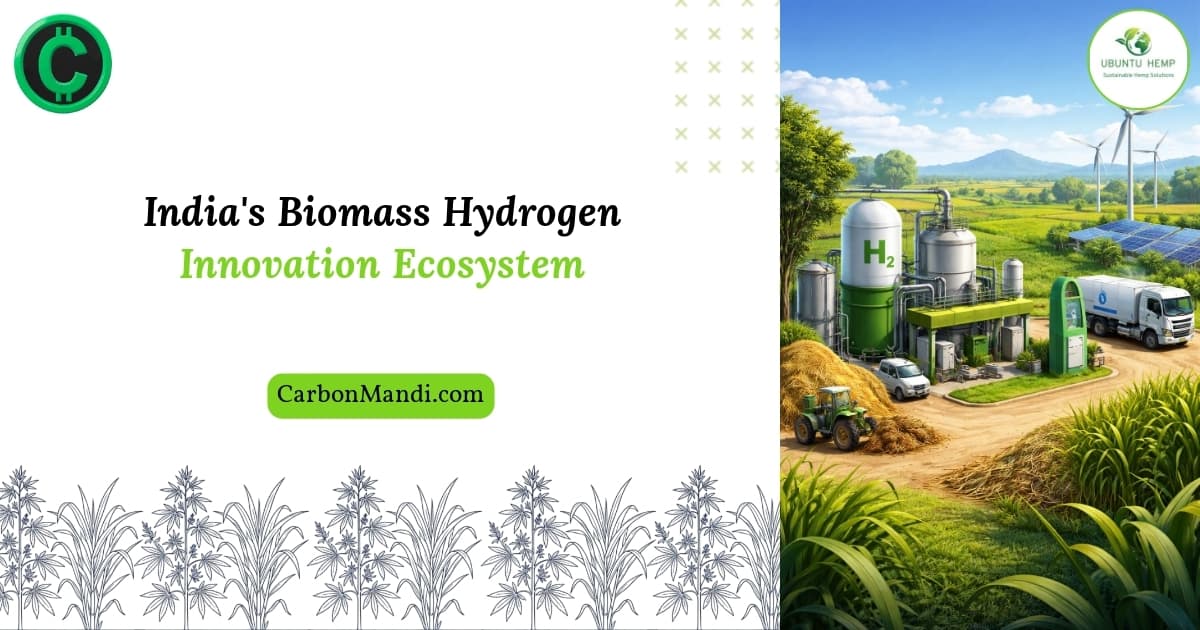
Inside India’s Biomass Hydrogen Innovation Ecosystem
- Carbon Credits
- India’s Biomass Hydrogen Innovation Ecosystem
- Sustainability
Table of Contents
- A Fresh Look at Biomass Hydrogen
- Driving Forces Behind Innovation
- How India is Making It Work
- Real-World Success Stories
- Questions You Might Have
- Taking the Next Step
A Fresh Look at Biomass Hydrogen
Imagine turning agricultural waste into a powerful fuel that can drive industries and reduce pollution. That’s exactly what India’s biomass hydrogen innovation ecosystem is achieving. This ecosystem is not just about producing hydrogen; it’s about creating a sustainable cycle where biomass, a renewable resource, fuels hydrogen production, cutting down reliance on fossil fuels. The innovation here lies in combining traditional biomass resources with modern hydrogen technology to create clean energy solutions tailored for India’s unique needs.
This ecosystem is gaining momentum as India pushes toward its climate goals. Biomass hydrogen offers a promising alternative because it leverages abundant agricultural residues and organic waste, which otherwise contribute to pollution when burned openly. By converting these materials into hydrogen, India is tapping into a cleaner, more efficient energy source that supports rural economies and reduces carbon footprints.
Driving Forces Behind Innovation
India’s push for biomass hydrogen innovation is powered by several key factors. First, the country’s vast agricultural sector produces enormous amounts of biomass waste annually. Instead of letting this waste go unused or cause environmental harm, innovators are turning it into a valuable resource. Second, government policies and incentives aimed at renewable energy adoption are encouraging startups and established companies to invest in hydrogen technologies.
Additionally, the global shift toward decarbonization is influencing India’s energy strategy. Biomass hydrogen fits well into this narrative by offering a low-carbon fuel option that can be integrated into existing energy infrastructures. The ecosystem also benefits from collaborations between research institutions, private companies, and government bodies, creating a fertile ground for innovation and scaling up.
How India is Making It Work
The process of turning biomass into hydrogen involves several steps. First, biomass feedstock such as crop residues, wood chips, or organic waste is collected and pre-treated to remove impurities. Then, through gasification or pyrolysis, the biomass is converted into a synthesis gas rich in hydrogen. This gas undergoes purification to isolate hydrogen, which can then be used as a clean fuel.
India’s approach focuses on optimizing these technologies to suit local conditions. For example, modular biomass gasifiers are being developed to serve rural areas where centralized plants are not feasible. This decentralized model allows farmers and small businesses to produce hydrogen on-site, creating new income streams and reducing transportation emissions.
Real-World Success Stories
One standout example is a pilot project in Maharashtra where agricultural waste from sugarcane fields is converted into hydrogen fuel. This project not only reduces open burning but also supplies hydrogen to nearby industries, cutting their carbon emissions significantly. Another case in Tamil Nadu involves a startup that uses biomass from coconut husks to produce hydrogen for fuel cell vehicles, showcasing how diverse biomass sources can be tapped.
These projects highlight the practical benefits of India’s biomass hydrogen innovation ecosystem. They demonstrate how technology, when combined with local resources and community involvement, can create sustainable energy solutions that are economically viable and environmentally friendly.
Questions You Might Have
What about the cost? While initial investments can be high, the long-term savings and environmental benefits make biomass hydrogen a competitive option. How scalable is this ecosystem? With ongoing research and government support, scalability is improving rapidly, especially with modular and decentralized systems.
Is biomass hydrogen truly clean? It depends on the feedstock and technology used, but when managed properly, it offers a much lower carbon footprint compared to fossil fuels. What role do communities play? Local involvement is crucial for feedstock supply and maintenance, making the ecosystem more resilient and inclusive.
Taking the Next Step
If you’re interested in how biomass hydrogen can impact your business or community, start by connecting with local innovators and policy makers. Explore pilot projects and consider partnerships that align with your sustainability goals. Stay informed through platforms like Carbonmandi and join discussions in renewable energy forums.
For ongoing updates and community support, Join our WhatsApp community. Carbonmandi building this With the advisory of Ubuntuhemp.