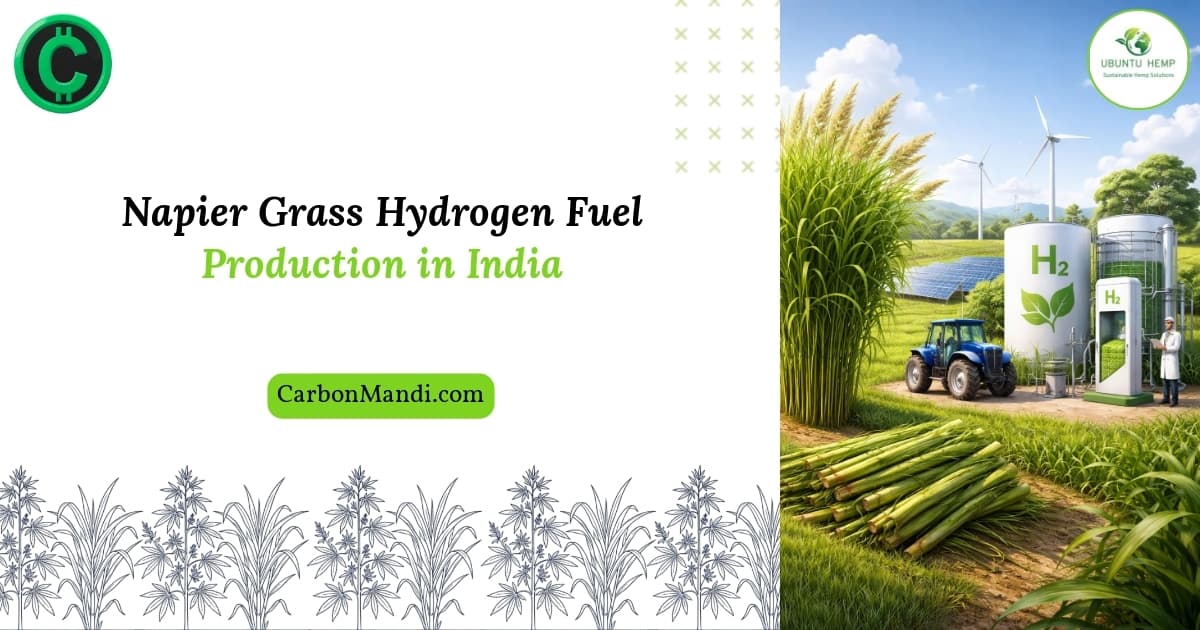
Napier Grass Hydrogen Fuel: India’s Green Energy Shift 2026
- Carbon Credits
- Napier Grass Hydrogen Fuel: Complete Guide for India 2026
- Sustainability
Table of Contents
- Rethinking Energy with Napier Grass
- Why Napier Grass for Hydrogen?
- Turning Grass into Fuel: The Process Explained
- Success Stories from Indian Innovators
- Questions on Adoption and Impact
- Taking the Next Step Together
Rethinking Energy with Napier Grass
Imagine a fuel source that grows fast, absorbs carbon, and powers vehicles without pollution. That’s the promise Napier Grass hydrogen fuel holds for India in 2026. This guide unpacks how this innovative bioenergy solution is gaining traction as a sustainable alternative to fossil fuels. Napier Grass, a hardy and fast-growing plant, is being harnessed to produce hydrogen fuel, offering a renewable energy source that fits India’s climate and agricultural landscape.
Hydrogen fuel from Napier Grass is not just a concept; it’s becoming a practical reality. This fuel can help reduce India’s carbon footprint while supporting rural economies. The keyword Napier Grass Hydrogen Fuel: Complete Guide for India 2026 is central to understanding this shift toward cleaner energy.
Why Napier Grass for Hydrogen?
Napier Grass stands out because of its rapid growth rate and high biomass yield, making it an excellent feedstock for hydrogen production. Unlike other crops, it requires minimal water and thrives in diverse soil conditions, which suits India’s varied geography. This grass also captures significant amounts of CO2 during growth, contributing to carbon sequestration.
Using Napier Grass for hydrogen fuel addresses two critical challenges: sustainable fuel production and carbon emissions reduction. The hydrogen produced burns cleanly, emitting only water vapor, which aligns with India’s goals to cut pollution and meet climate targets. This approach also offers farmers a new revenue stream, linking agriculture with clean energy innovation.
Turning Grass into Fuel: The Process Explained
The transformation of Napier Grass into hydrogen fuel involves several key steps:
- Cultivation: Farmers grow Napier Grass on marginal lands, ensuring no competition with food crops.
- Harvesting and Preprocessing: The biomass is collected and prepared for conversion.
- Gasification or Biochemical Conversion: The biomass undergoes processes like gasification or anaerobic digestion to release hydrogen.
- Purification: The hydrogen gas is purified to meet fuel standards.
- Distribution: The clean hydrogen is then supplied for use in fuel cells or combustion engines.
This process is scalable and adaptable, making it suitable for both rural and urban energy needs. The integration of this technology with existing agricultural practices creates a circular economy model that benefits multiple stakeholders.
Success Stories from Indian Innovators
Several pilot projects across India showcase the potential of Napier Grass hydrogen fuel. In Karnataka, a cooperative of farmers partnered with clean energy startups to produce hydrogen fuel locally. This initiative reduced reliance on diesel generators and cut emissions by nearly 30% in the region.
Another example comes from Tamil Nadu, where a research institute developed a cost-effective gasification system tailored for Napier Grass. Their success demonstrated that hydrogen fuel could be produced affordably and sustainably, encouraging government interest and funding.
These real-world applications highlight how Napier Grass hydrogen fuel is moving beyond theory into impactful practice, supporting India’s energy transition.
Questions on Adoption and Impact
What about the costs involved? While initial investments in technology and infrastructure are significant, the long-term benefits include lower fuel costs and environmental savings. How does this fuel compare to other renewables? Hydrogen from Napier Grass complements solar and wind by providing a stable, transportable energy source.
Are there environmental concerns? The cultivation of Napier Grass is generally low-impact, but sustainable land management is essential to avoid monoculture risks. What about scalability? With government support and community engagement, scaling up production is feasible and promising.
Taking the Next Step Together
If you’re curious about how Napier Grass hydrogen fuel can fit into your energy plans or community projects, start by connecting with local agricultural and clean energy groups. Explore pilot programs and stay informed about government incentives.
Join the conversation and share insights with peers by joining our WhatsApp community. Together, we can accelerate India’s clean energy future.
Carbonmandi building this With the advisory of Ubuntuhemp