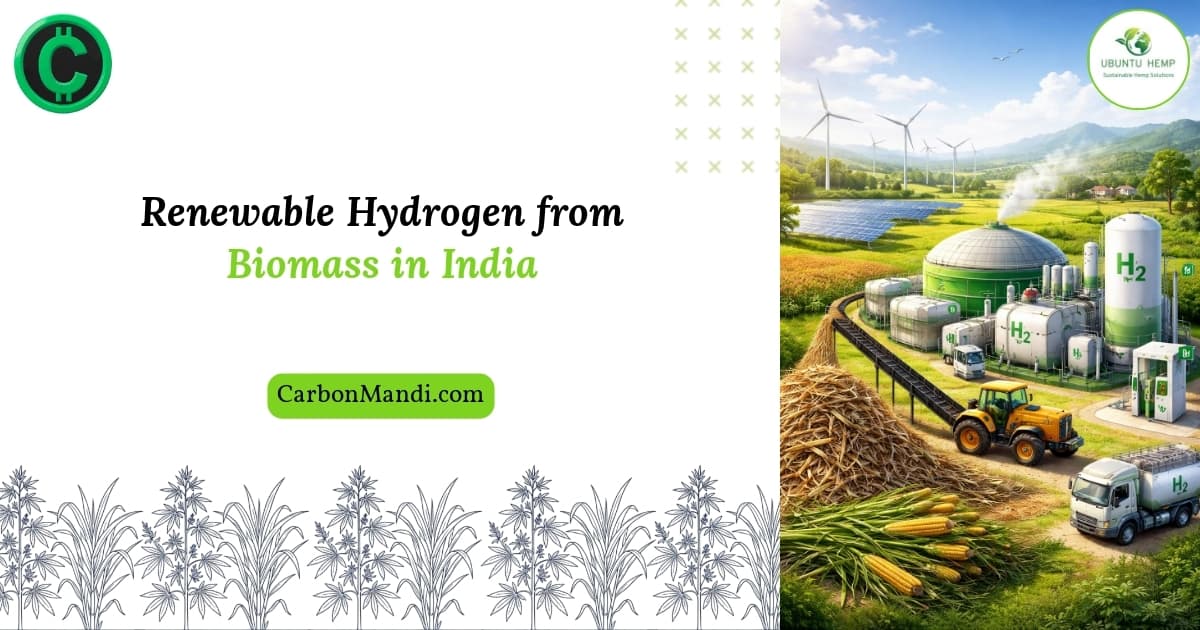
Renewable Hydrogen from Biomass: India’s Next Energy Leap
- Carbon Credits
- Renewable Hydrogen from Biomass: India’s Next Energy Leap
- Sustainability
Table of Contents
- A New Chapter in India’s Energy Story
- Unlocking the Power of Biomass
- Steps to Harness Renewable Hydrogen
- Real-World Progress in India
- Questions on Renewable Hydrogen Answered
- Moving Forward with Confidence
A New Chapter in India’s Energy Story
Imagine a future where India’s energy needs are met not by fossil fuels but by clean, renewable hydrogen derived from biomass. This isn’t just a dream; it’s becoming a tangible reality. Renewable hydrogen from biomass: India’s next energy leap is poised to reshape how the country powers its industries and homes. With growing concerns about climate change and energy security, India’s vast agricultural residues and organic waste offer a promising feedstock for producing green hydrogen.
This approach taps into the country’s abundant biomass resources, turning waste into a valuable energy carrier. The result? A sustainable energy source that reduces carbon emissions and supports rural economies. Renewable hydrogen from biomass is gaining traction as a key player in India’s ambitious energy transition.
Unlocking the Power of Biomass
Biomass, which includes agricultural waste, forestry residues, and organic municipal waste, holds immense potential for hydrogen production. Unlike traditional hydrogen production methods that rely heavily on natural gas, biomass-based hydrogen is renewable and carbon-neutral when managed sustainably.
The process involves converting biomass into hydrogen through thermochemical or biochemical methods. This not only helps manage waste effectively but also creates a circular economy where energy and environmental benefits go hand in hand. India’s agricultural sector produces millions of tons of biomass annually, making it an ideal candidate for scaling renewable hydrogen production.
Steps to Harness Renewable Hydrogen
To make renewable hydrogen from biomass a mainstream energy source, India needs a clear strategy. Here’s a simplified roadmap:
- Feedstock Collection and Preparation: Efficiently gather and preprocess biomass to ensure consistent quality.
- Conversion Technology Deployment: Use gasification or fermentation technologies to convert biomass into hydrogen.
- Purification and Storage: Clean the hydrogen produced and store it safely for distribution.
- Infrastructure Development: Build pipelines, refueling stations, and integration points with existing energy systems.
- Policy and Incentives: Implement supportive policies and financial incentives to encourage investment.
Each step requires collaboration between government, industry, and research institutions to overcome technical and economic challenges.
Real-World Progress in India
Several pilot projects across India demonstrate the viability of renewable hydrogen from biomass. For example, a project in Tamil Nadu uses sugarcane bagasse to produce hydrogen, powering local industries with reduced emissions. Another initiative in Maharashtra converts municipal solid waste into hydrogen, showcasing urban applications.
These projects highlight how renewable hydrogen can be integrated into India’s energy mix, providing cleaner alternatives for transportation, power generation, and industrial processes. They also create jobs and promote sustainable rural development.
Questions on Renewable Hydrogen Answered
How clean is hydrogen from biomass? When biomass is sourced sustainably, the carbon released during conversion is offset by the carbon absorbed during plant growth, making it a low-carbon fuel.
Is the technology affordable? While initial costs are higher than conventional fuels, ongoing research and economies of scale are driving prices down.
Can this scale to meet India’s energy demand? With India’s vast biomass availability and government support, scaling is feasible but requires coordinated efforts.
Moving Forward with Confidence
Renewable hydrogen from biomass offers India a pathway to energy independence and environmental stewardship. To stay informed and connected with others passionate about this energy leap, consider joining the conversation.
Explore more insights and updates by joining our WhatsApp community. Engage with experts, share ideas, and be part of India’s clean energy future.
Carbonmandi building this With the advisory of Ubuntuhemp