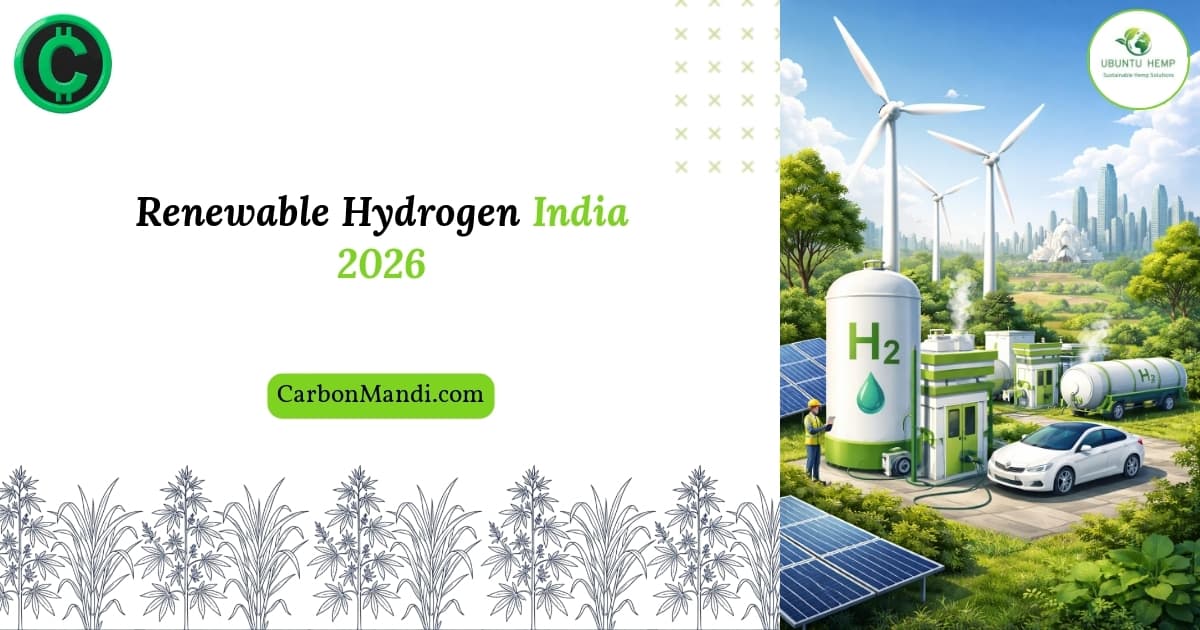
Renewable Hydrogen India: Your 2026 Roadmap
- Carbon Credits
- Renewable Hydrogen India: Complete Guide for India 2026
- Sustainability
Table of Contents
- Setting the Stage for Renewable Hydrogen
- Why Renewable Hydrogen Matters in India
- How India is Making It Happen
- Success Stories Lighting the Way
- Questions on Renewable Hydrogen Answered
- Taking Your First Steps
Setting the Stage for Renewable Hydrogen
Imagine a fuel that burns clean, emits only water, and can be produced using India's abundant renewable resources. That's renewable hydrogen, and it's becoming a game changer for India's energy landscape in 2026. This guide explores how renewable hydrogen is shaping the future, offering a fresh perspective on energy independence and sustainability. With the global shift towards cleaner energy sources, India is poised to leverage its vast solar and wind potential to produce hydrogen, making it a pivotal player in the renewable energy sector.
Why Renewable Hydrogen Matters in India
India's energy demand is soaring, and with it, the urgency to reduce carbon emissions. Renewable hydrogen offers a unique solution by using solar and wind power to split water into hydrogen and oxygen. This process produces zero carbon emissions, making it a vital tool in India's climate goals. Beyond environmental benefits, renewable hydrogen can boost energy security and create new economic opportunities across sectors. For instance, the Indian government aims to generate 5 million tonnes of green hydrogen annually by 2030, which could significantly reduce reliance on imported fossil fuels and enhance energy self-sufficiency.
How India is Making It Happen
India's approach to renewable hydrogen involves a mix of government policies, private sector innovation, and infrastructure development. Key initiatives include:
- Scaling up electrolyzer manufacturing to reduce costs. Companies like Tata Power are investing in advanced electrolyzer technologies to enhance efficiency and lower production costs.
- Integrating hydrogen into existing industrial processes like fertilizer and steel production. The Indian Oil Corporation is exploring hydrogen blending in its refineries to reduce carbon footprints.
- Developing hydrogen refueling stations to support clean transportation. Cities like Delhi are planning to establish hydrogen refueling infrastructure to support hydrogen fuel cell vehicles, promoting cleaner urban mobility.
These steps reflect a strategic push to embed renewable hydrogen into the energy ecosystem, leveraging India's renewable energy capacity and industrial base. The government is also facilitating research and development through initiatives like the National Hydrogen Mission, which aims to create a comprehensive framework for hydrogen production and utilization.
Success Stories Lighting the Way
One standout example is a pilot project in Gujarat where renewable hydrogen is powering a fertilizer plant, cutting emissions by nearly 30%. This project not only demonstrates the feasibility of hydrogen in industrial applications but also sets a precedent for future initiatives. Another case in Tamil Nadu involves hydrogen-powered buses reducing urban pollution, showcasing how renewable hydrogen can transform public transportation. These projects demonstrate practical applications and the tangible benefits renewable hydrogen brings to India's economy and environment. Additionally, collaborations between private companies and research institutions are fostering innovation, leading to breakthroughs in hydrogen storage and transport technologies.
Questions on Renewable Hydrogen Answered
What about cost? While still higher than fossil fuels, costs are dropping rapidly with technology advances and scale. Is infrastructure ready? It's developing fast, with government support accelerating deployment. How does renewable hydrogen fit with other renewables? It complements solar and wind by storing excess energy and providing fuel for sectors hard to electrify. Moreover, as the market matures, the cost of renewable hydrogen is expected to reach parity with conventional fuels, making it a competitive option.
Taking Your First Steps
For businesses and individuals interested in renewable hydrogen, start by joining knowledge-sharing platforms and industry groups. Explore partnerships with technology providers and keep an eye on government incentives. Engage with communities like ours on WhatsApp to stay updated and connected: Join our WhatsApp community. Additionally, consider attending workshops and seminars focused on renewable hydrogen to deepen your understanding and network with industry experts. By taking these steps, you can position yourself at the forefront of India's renewable hydrogen revolution, contributing to a sustainable future.