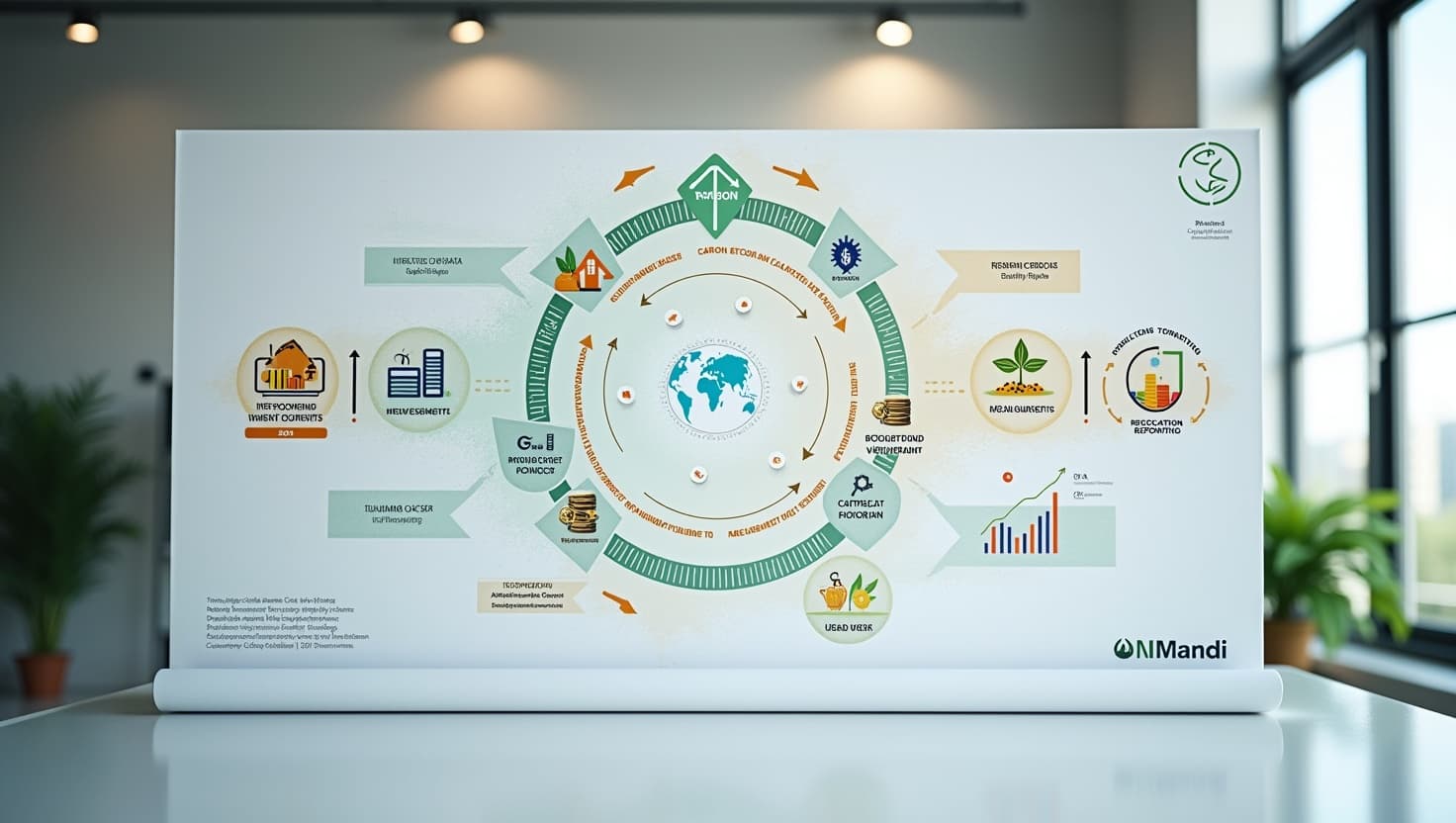
Understanding Carbon Accounting: A Clear Path to Emission Transparency
- carbon accounting
- Carbon Credits
- Sustainability
Table of Contents
- Why Carbon Accounting Matters
- How Carbon Accounting Shapes Business Decisions
- Steps to Implement Carbon Accounting
- Real-World Success Stories
- Common Questions About Carbon Accounting
- Taking Action on Carbon Accounting
Why Carbon Accounting Matters
Carbon accounting works differently than many expect. It’s not just about tallying emissions but about creating a transparent, actionable record of a company’s environmental impact. This process helps businesses understand where their carbon footprint lies and how to reduce it effectively. With growing regulatory pressures and consumer demand for sustainability, carbon accounting has become a critical tool for companies aiming to stay competitive and responsible.
Tracking emissions accurately through carbon accounting allows organizations to identify hotspots and inefficiencies. It’s a foundational step toward meaningful climate action and can unlock opportunities for cost savings and improved brand reputation. The keyword carbon accounting naturally fits into this evolving landscape as a method to quantify and manage greenhouse gas emissions.
How Carbon Accounting Shapes Business Decisions
Beyond compliance, carbon accounting influences strategic choices. When companies have clear data on their emissions, they can prioritize investments in cleaner technologies or operational changes. This data-driven approach helps avoid guesswork and supports measurable progress.
For example, a business might discover that its supply chain contributes a significant portion of emissions. With this insight, it can engage suppliers to adopt greener practices or switch to more sustainable materials. Carbon accounting thus becomes a decision-making compass, guiding efforts that align environmental goals with financial performance.
Steps to Implement Carbon Accounting
Implementing carbon accounting involves several key steps:
- Define the scope: Decide which emissions to measure, including direct emissions from owned sources and indirect emissions from purchased energy or supply chains.
- Collect data: Gather accurate activity data such as fuel consumption, electricity use, and transportation metrics.
- Calculate emissions: Use recognized standards and emission factors to convert activity data into carbon dioxide equivalent (CO2e) emissions.
- Analyze results: Identify major emission sources and trends to target reduction efforts.
- Report and verify: Document findings transparently and consider third-party verification to enhance credibility.
Following these steps ensures a robust carbon accounting process that supports sustainability goals and regulatory compliance.
Real-World Success Stories
Consider a mid-sized manufacturing firm that recently adopted carbon accounting. By mapping its emissions, the company found that energy use in production was the largest contributor. It invested in energy-efficient machinery and switched to renewable electricity, cutting emissions by 30% within a year.
Another example is a retail chain that used carbon accounting to assess its logistics network. The data revealed inefficiencies in delivery routes, prompting a redesign that reduced fuel consumption and emissions by 15%. These cases show how carbon accounting translates into tangible environmental and business benefits.
Common Questions About Carbon Accounting
What types of emissions should be included? Typically, companies track Scope 1 (direct), Scope 2 (indirect from purchased energy), and sometimes Scope 3 (other indirect emissions) depending on their goals.
How often should carbon accounting be done? Annual accounting is common, but some organizations update more frequently to monitor progress closely.
Is third-party verification necessary? While not always mandatory, verification adds trustworthiness and can be important for reporting to stakeholders or participating in carbon markets.
Taking Action on Carbon Accounting
Getting started with carbon accounting can seem daunting, but the benefits are clear. Begin by gathering your team and defining your emissions boundaries. Use available tools and standards to guide your calculations.
Engage with experts or join communities to share knowledge and stay updated on best practices. For ongoing support and discussion, consider joining our WhatsApp community: Join our WhatsApp community.
Carbon accounting is more than a reporting exercise; it’s a strategic asset for any organization committed to sustainability. Take the first step today and build a clearer, greener future.