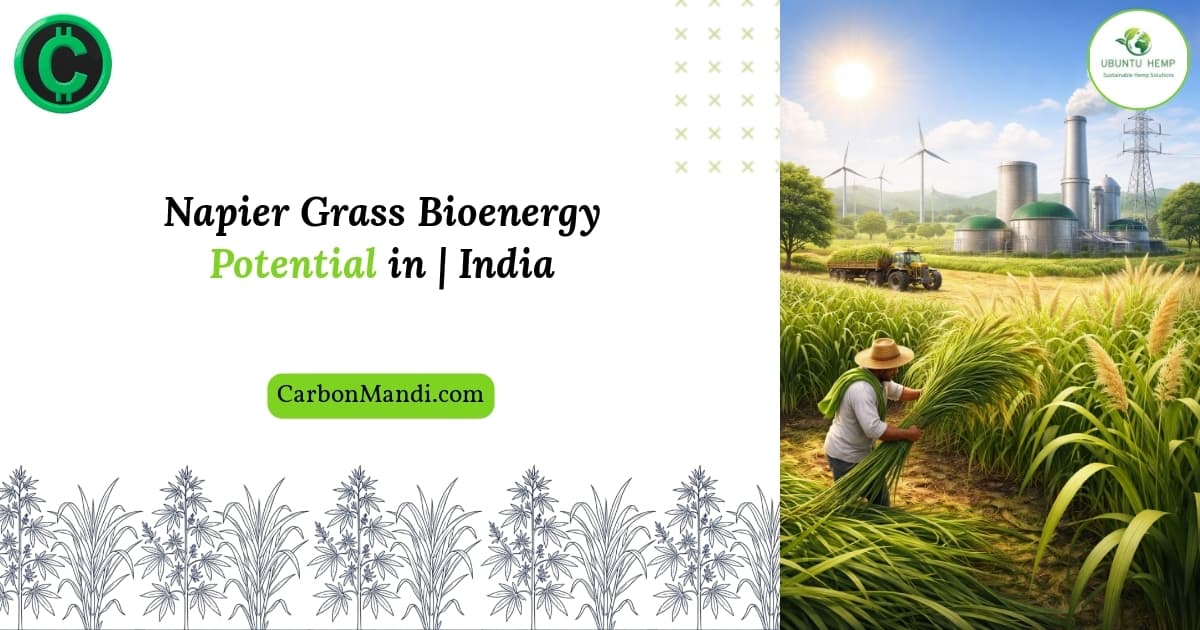
Unlocking Napier Grass Bioenergy Potential in India
- Carbon Credits
- Napier Grass Bioenergy Potential in India
- Sustainability
Table of Contents
- A Fresh Look at Napier Grass
- Why Napier Grass Matters for Energy
- Turning Grass into Power: The Process
- Success Stories from Indian States
- Questions on Bioenergy Viability
- Taking the Next Step
A Fresh Look at Napier Grass
Napier grass is gaining attention as a powerhouse for bioenergy in India. Unlike traditional crops, this fast-growing grass thrives on marginal lands, making it an ideal candidate for sustainable energy production. The Napier Grass Bioenergy Potential in India is significant because it offers a renewable source that can reduce dependence on fossil fuels while supporting rural economies.
This grass can grow up to 3-4 meters in just a few months, producing large amounts of biomass. Its adaptability to various climates across India means it can be cultivated widely, providing a steady feedstock for bioenergy plants. The natural resilience of Napier grass also reduces the need for intensive fertilizers or irrigation, aligning well with eco-friendly energy goals.
Why Napier Grass Matters for Energy
Napier grass stands out because of its high yield and carbon sequestration capabilities. It absorbs CO2 efficiently, which helps offset emissions when used as bioenergy. This dual role of energy production and carbon capture makes it a valuable asset in India's carbon market strategies.
Moreover, the grass's biomass can be converted into multiple forms of energy: biogas, bioethanol, and direct combustion for heat and power generation. This versatility enhances its appeal for diverse energy projects. The economic benefits extend to farmers who can diversify income streams by growing Napier grass alongside food crops or on otherwise unproductive land.
Turning Grass into Power: The Process
The journey from Napier grass to usable energy involves several key steps:
- Cultivation: Selecting suitable land and planting Napier grass with minimal inputs.
- Harvesting: Cutting the grass at optimal maturity to maximize biomass quality.
- Processing: Converting biomass through anaerobic digestion for biogas or fermentation for bioethanol.
- Energy Generation: Using the processed biofuel in power plants or as direct fuel for heating.
Each step requires careful management to ensure efficiency and sustainability. For instance, timing the harvest affects the energy content of the biomass, while processing technology determines the final energy output and emissions profile.
Success Stories from Indian States
In states like Karnataka and Tamil Nadu, pilot projects have demonstrated the Napier Grass Bioenergy Potential in India. One cooperative in Karnataka integrated Napier grass cultivation with local dairy farming, using the biogas produced to power farm operations. This closed-loop system reduced energy costs by 30% and lowered methane emissions from manure.
Tamil Nadu's bioethanol plant sources Napier grass from nearby farms, creating jobs and stabilizing farmer incomes. These examples highlight how bioenergy projects can be tailored to local conditions, maximizing both environmental and economic benefits.
Questions on Bioenergy Viability
How sustainable is Napier grass cultivation in India? Given its low water and fertilizer needs, it is well-suited for dry and semi-arid regions, minimizing environmental strain.
Can Napier grass compete with food crops for land? Its ability to grow on marginal lands means it does not directly compete with staple food production, addressing a common concern.
What about carbon credits? Projects using Napier grass for bioenergy can generate carbon credits by demonstrating reduced greenhouse gas emissions, making them attractive for carbon markets.
Taking the Next Step
For those interested in exploring Napier grass bioenergy, connecting with experts and communities is crucial. Engaging with local agricultural bodies and bioenergy firms can provide practical insights and partnership opportunities.
Join discussions and share experiences with peers by joining our WhatsApp community. This platform offers updates on innovations and policy changes affecting bioenergy in India.
Carbonmandi is building this with the advisory of Ubuntuhemp, ensuring expert guidance and sustainable development practices.