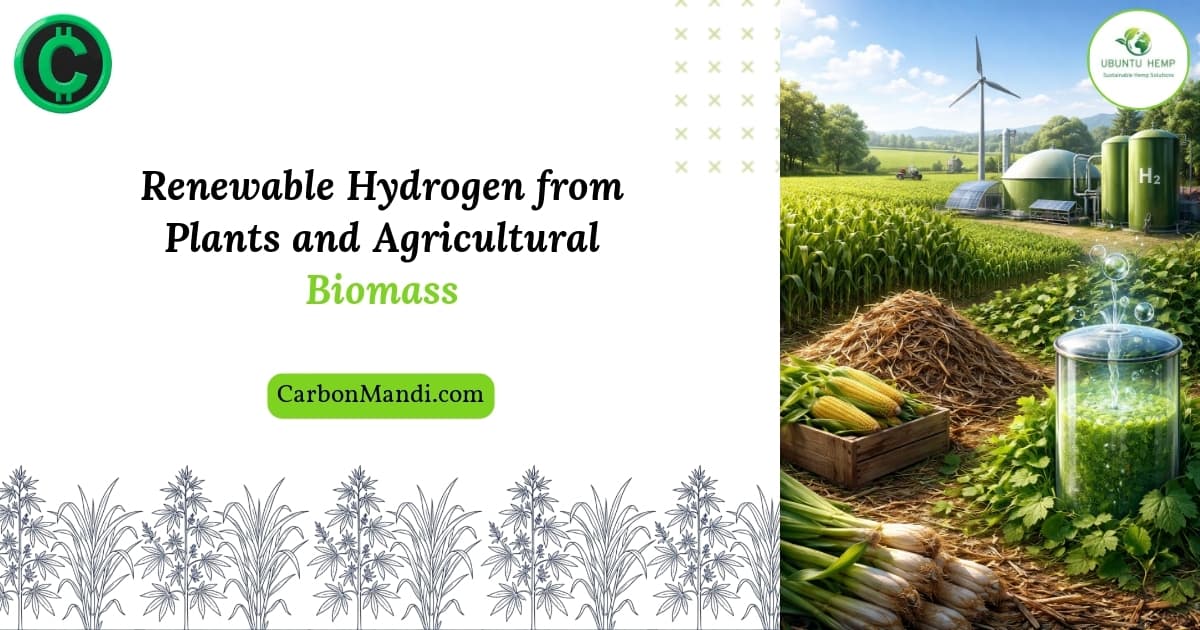
Unlocking Renewable Hydrogen from Plants and Agricultural Biomass
- Carbon Credits
- Renewable Hydrogen from Plants and Agricultural Biomass
- Sustainability
Table of Contents
- A Fresh Look at Renewable Hydrogen
- Why Biomass Matters for Hydrogen
- Turning Plants into Clean Energy
- Real-World Success Stories
- Common Questions About Renewable Hydrogen
- Taking Action on Renewable Hydrogen
A Fresh Look at Renewable Hydrogen
Renewable hydrogen from plants and agricultural biomass is gaining attention as a promising solution for sustainable energy. Unlike traditional hydrogen production methods that rely on fossil fuels, this approach taps into the natural carbon cycle. By using plant matter and agricultural residues, we can generate hydrogen while reducing greenhouse gas emissions. This method not only supports cleaner energy but also creates value from waste materials.
The concept might sound complex, but it’s rooted in a simple idea: plants capture carbon dioxide as they grow, storing energy in their biomass. When this biomass is converted into hydrogen, it releases energy without adding new carbon to the atmosphere. This makes renewable hydrogen from plants and agricultural biomass a key player in the transition to a low-carbon economy.
Why Biomass Matters for Hydrogen
Agricultural biomass includes crop residues, dedicated energy crops, and organic waste from farming activities. These materials are abundant and often underutilized, making them ideal feedstocks for renewable hydrogen production. Using biomass helps address two challenges at once: managing agricultural waste and producing clean energy.
The environmental impact is significant. Instead of burning crop residues, which releases pollutants and carbon dioxide, converting them into hydrogen offers a cleaner alternative. This process also supports rural economies by creating new markets for agricultural byproducts. The synergy between agriculture and energy production is a powerful driver for sustainable development.
Turning Plants into Clean Energy
The process of producing renewable hydrogen from plants and agricultural biomass involves several steps. First, biomass is collected and prepared for conversion. Then, technologies like gasification or anaerobic digestion break down the organic material to release hydrogen-rich gases. These gases are purified to extract hydrogen suitable for fuel cells or industrial use.
Here’s a simplified breakdown:
- Collection of agricultural biomass such as corn stalks, wheat straw, or hemp residues.
- Pre-treatment to remove impurities and optimize the material.
- Conversion through gasification or biological methods to produce hydrogen-rich gas.
- Purification to isolate hydrogen from other gases.
- Storage and distribution for use in energy systems.
This approach is flexible and can be adapted to different scales, from small farms to large industrial plants. It also complements other renewable energy sources, helping to stabilize energy supply and reduce reliance on fossil fuels.
Real-World Success Stories
One inspiring example comes from a cooperative in the Midwest United States that turned corn stover into renewable hydrogen. By partnering with local farmers, they created a supply chain for biomass that feeds a hydrogen production facility. This project not only reduced waste burning but also supplied clean hydrogen for transportation and power generation.
In Europe, a pilot project used hemp biomass to produce renewable hydrogen for industrial applications. The initiative demonstrated how agricultural residues could be integrated into existing energy infrastructures, lowering carbon footprints and supporting circular economy principles.
These cases highlight the practical potential of renewable hydrogen from plants and agricultural biomass. They show how innovation and collaboration can unlock new opportunities in the carbon market and clean energy sectors.
Common Questions About Renewable Hydrogen
What makes renewable hydrogen from plants different from other hydrogen types? It’s the source material and carbon impact. Unlike grey hydrogen from natural gas, renewable hydrogen uses biomass that absorbed CO2 during growth, making it carbon-neutral or even carbon-negative.
Is the technology ready for widespread use? While still developing, many conversion methods are commercially viable today. Advances in gasification and biological processes continue to improve efficiency and reduce costs.
How does this fit into carbon markets? Renewable hydrogen projects can generate carbon credits by reducing emissions and promoting sustainable land use. This creates financial incentives for farmers and energy producers to adopt these technologies.
Taking Action on Renewable Hydrogen
If you’re interested in exploring renewable hydrogen from plants and agricultural biomass, start by connecting with local agricultural groups and energy experts. Assess the availability of biomass resources and potential partners for technology deployment.
Joining communities focused on carbon markets and renewable energy can provide valuable insights and support. For example, Join our WhatsApp community to engage with professionals and enthusiasts in this space.
Carbonmandi is building this with the advisory of Ubuntuhemp, combining expertise in carbon markets and sustainable agriculture to drive innovation in renewable hydrogen production. Together, we can accelerate the shift toward cleaner energy and a healthier planet.